Problem
GTM automation becomes risky when decisions disappear inside disconnected tools.
Qualification, research, tools, and outbound actions need shared state, clear boundaries, and a durable audit trail.
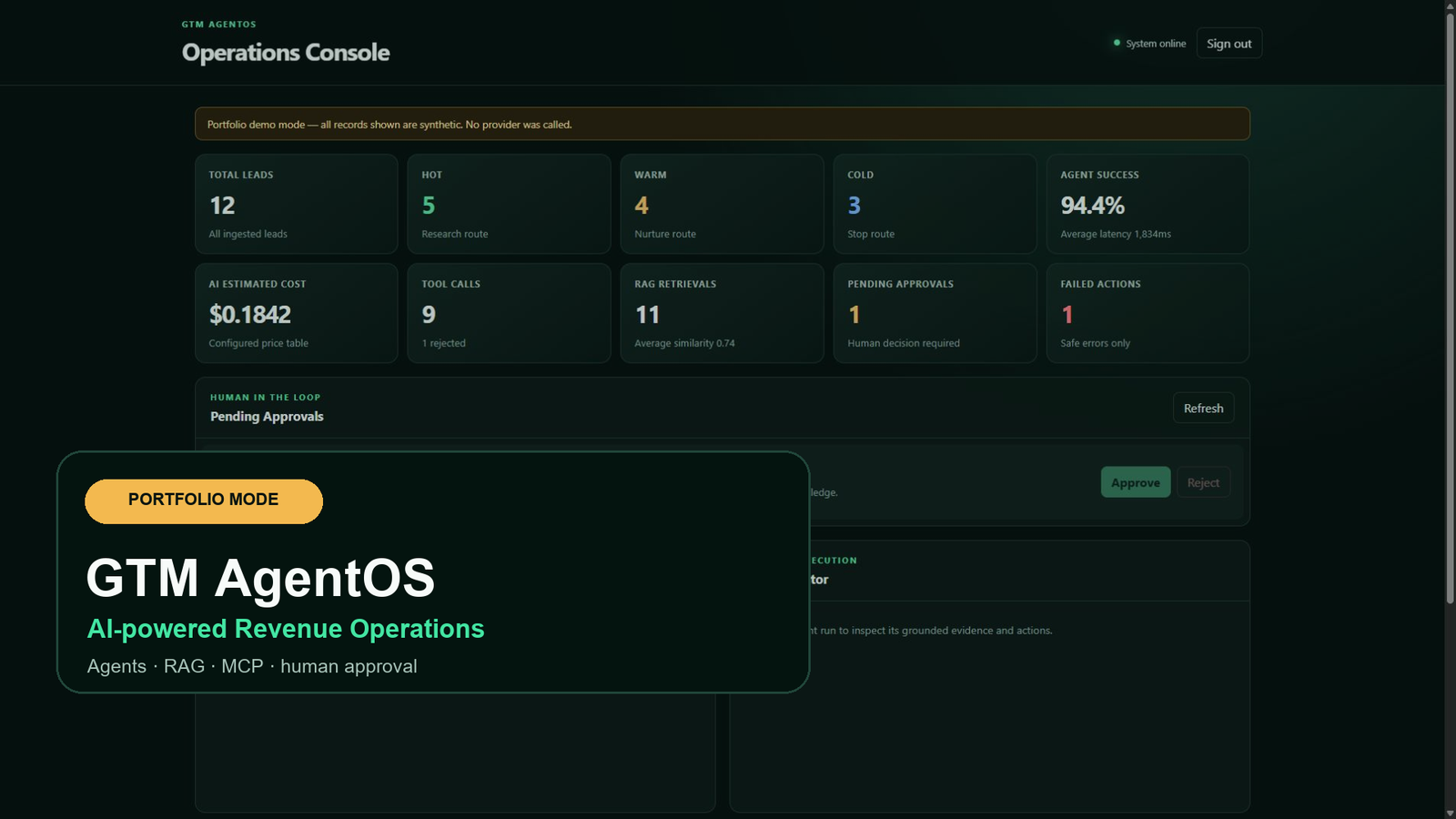
Flagship project · GTM AgentOS
An AI-native platform that qualifies leads, routes agent workflows, retrieves grounded internal knowledge, exposes controlled tools, and requires human approval before sensitive external actions.
Problem
Qualification, research, tools, and outbound actions need shared state, clear boundaries, and a durable audit trail.
Solution
GTM AgentOS combines structured AI outputs, explicit graph routing, grounded evidence, allowlisted MCP tools, approval gates, and production-style observability.
End-to-end demo
Portfolio Mode uses synthetic data and does not call external providers during capture.
Architecture
Each boundary has a narrow responsibility and leaves evidence for the next one.
Idempotent intake creates one durable lead record.
Structured output produces score, classification, and next action.
Explicit state transitions route HOT, WARM, and COLD paths.
Voyage embeddings and pgvector return ranked internal knowledge.
Allowlisted, validated calls are audited before reaching a handler.
Sensitive external actions remain pending until an operator decides.
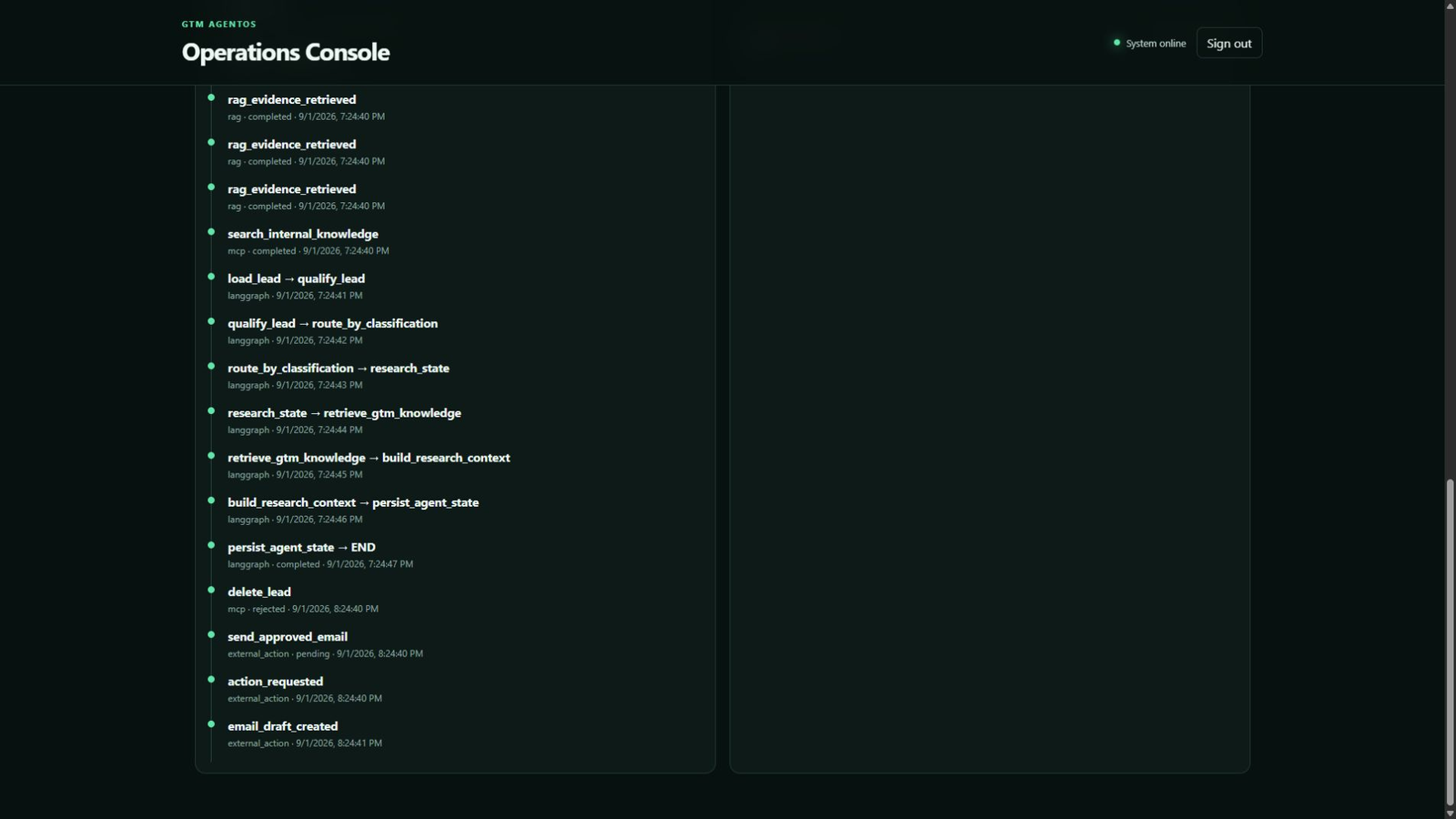
Runs, transitions, evidence, latency, usage, and actions form one timeline.
Key engineering challenges
Qualification stays inside a typed contract before it can affect routing.
Repeated requests do not create duplicate leads or duplicate provider calls.
Every routing decision is persisted from START through END.
Research is built from ranked internal evidence, with a safe no-context fallback.
Only six explicit read-oriented tools are discoverable; unknown tools are rejected and audited.
Sensitive actions cannot dispatch while they remain pending.
n8n requests are signed, time-bounded, and guarded against reuse.
The console is authenticated without exposing service credentials to the browser.
Operations console
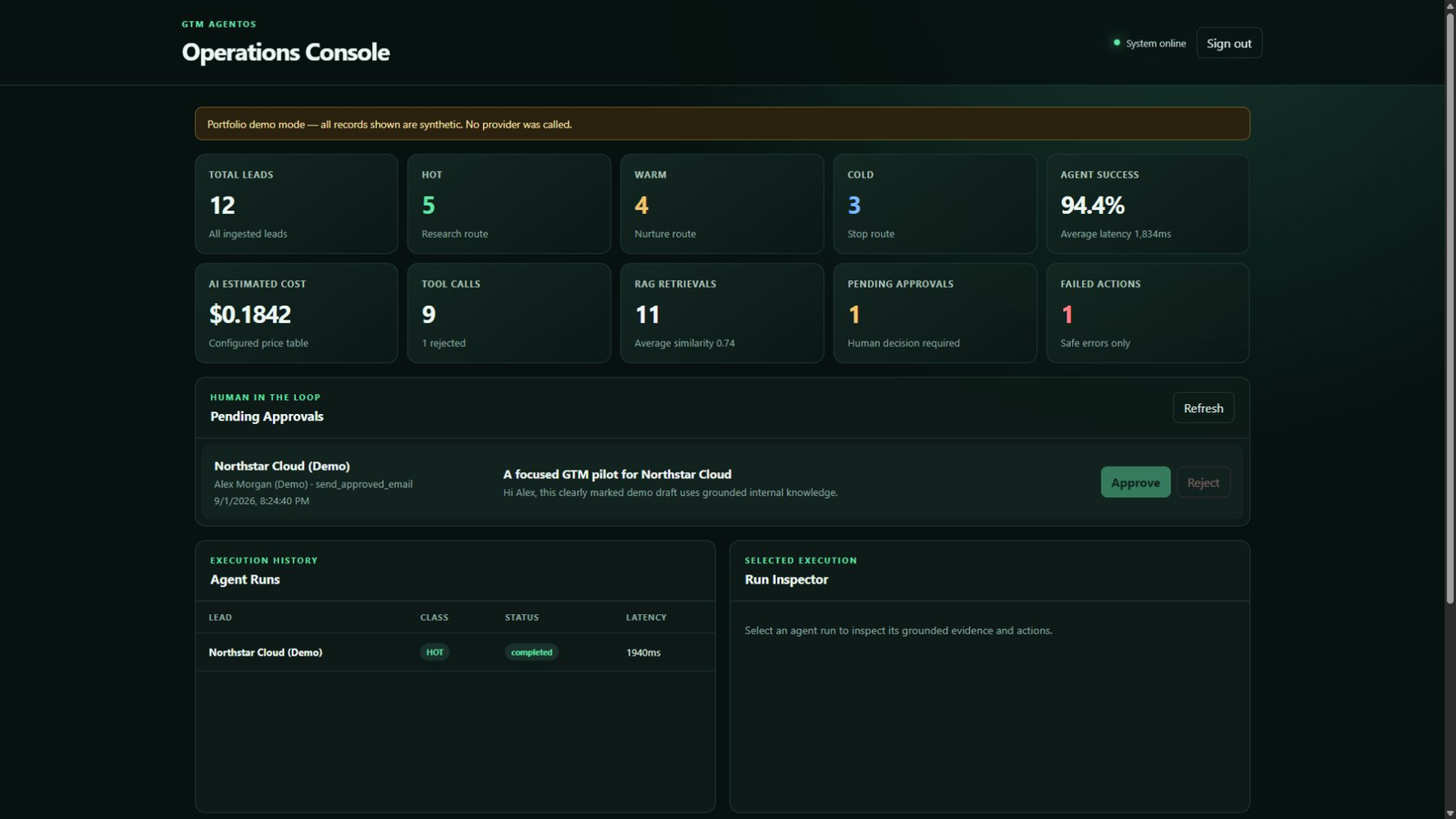
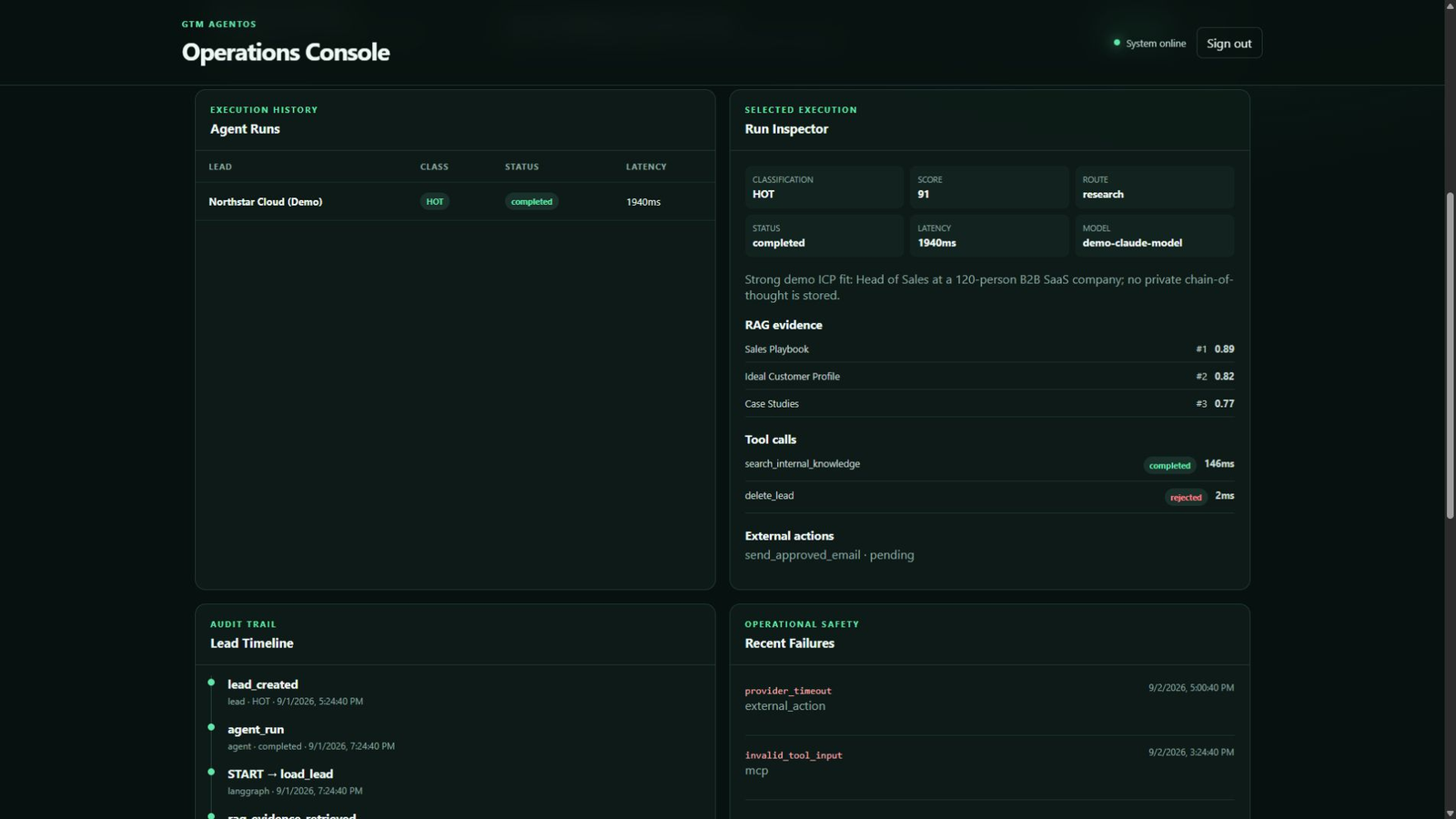
The console connects portfolio-safe metrics, run inspection, RAG sources, tool controls, approval state, and the lead timeline.
End-to-end validation
Major flows were validated across the real Supabase, Claude, Voyage AI, pgvector, MCP, n8n, HubSpot, and Resend integrations during the documented project phases.
Public demos use synthetic data. This case study claims production-style engineering and end-to-end validation — not a production deployment.
Inspect the implementation